
Chilton County Criminal Court Records
A criminal court record is the court case file kept after a criminal matter opens. In Chilton County, Circuit Court handles felony criminal prosecutions, while District Court handles misdemeanors, felony preliminary hearings, and non-capital felony guilty pleas. The Circuit Clerk is the official record keeper for both Circuit and District Court proceedings, including criminal divisions, subpoenas, notices, fines, and fees.
The criminal court record should not be treated as the same thing as an arrest record. Arrest and custody details start with law enforcement and the jail roster. The court file starts when a complaint, warrant, indictment, information, plea, order, or related court filing enters the clerk's system. For the arrest-to-charge pathway, use the Chilton County arrest records and court charges page. For all court case types, use the broader court records page.
Search Chilton County Criminal Records
Use Alacourt Access for Chilton County for online trial-court case access. The public landing page states that AlacourtAccess covers Alabama state trial-court records, including criminal matters, but detailed public search fields were not visible in the static research capture. When the portal does not provide enough information, the local Circuit Criminal Division and District Criminal Division are the next access channels.
- Start with the defendant name, case number, citation number, or charge information if known.
- Use Alacourt Access for online criminal docket lookup and expect account or on-demand access for detailed records.
- Contact Circuit Criminal for felony case questions and District Criminal for misdemeanor or preliminary-hearing matters.
- Read the docket for charges, plea activity, motions, disposition, sentence, fines, costs, and probation entries.
- Request certified copies from the Circuit Clerk if the record will be used for court, licensing, or formal proof.
The Office of the 19th Circuit District Attorney serves Autauga, Chilton, and Elmore counties. Its role is prosecution, victim support, and case handling after law enforcement referral. It is not the public custodian for court case copies, but its work explains why charges may be amended, dismissed, or resolved as a case moves through court.
The local prosecution source captured for this page is the Office of the 19th Circuit District Attorney.
That office is part of the criminal case pathway, while court records and certified copies still route through the court clerk.
Chilton County Criminal Case Stages
A criminal case file grows in stages. Charge information may appear first in law enforcement and booking records, but the court file shows how the charge was handled in the judicial process. District Court may hold misdemeanor matters and felony preliminary proceedings. Circuit Court handles felony prosecution and sentencing. Victims, investigators, and witnesses may receive court-status updates through subpoena processes described in the Sheriff's FAQ.
Case flow: Charges Filed › Arraignment › Pretrial / Motions › Plea or Trial › Disposition › Sentencing
| Stage | What Happens |
|---|---|
| Charges Filed | The complaint, warrant, indictment, or information moves the accusation into a court case. |
| Arraignment | The defendant is advised of the charge and enters an initial plea. |
| Pretrial / Motions | The record may show motions, subpoenas, notices, bond actions, and hearing settings. |
| Plea or Trial | The case resolves by plea, dismissal, trial verdict, or another court disposition. |
| Sentencing | The record may show sentence, probation, fines, costs, credit, and later compliance events. |
What Chilton County Criminal Records Show
Research for Chilton County identifies the expected criminal case file contents as complaint, warrant, indictment or information, bond, arraignment, plea, motions, docket entries, disposition, sentence, probation, fines, costs, and subpoenas. The file may also contain court notices, scheduled hearing notices, and records of fees collected by the clerk. A final disposition is especially important because charges alone do not prove guilt.
| Field | What It Shows |
|---|---|
| Case Number | The court's identifier for the criminal matter, often used for clerk lookup and copy requests. |
| Defendant | The person charged in the criminal case. |
| Charges | Offenses as filed or later amended, reduced, dismissed, or otherwise resolved. |
| Bond | Release security or bond action, when part of the court file. |
| Plea | Guilty, not guilty, or other plea entry shown in the docket or case file. |
| Disposition | The case outcome, such as guilty, dismissed, acquitted, no-billed, or otherwise resolved. |
| Sentence | Punishment after conviction, including jail, probation, fines, costs, or other court terms. |
Charges vs Convictions
Being charged is not the same as being convicted. A Chilton County criminal court record can show charges that were filed, amended, reduced, dismissed, no-billed, or resolved by acquittal. The conviction question depends on the final disposition or plea, not on the first booking label or initial accusation. That is why the court record matters more than a roster entry when checking the legal outcome.
| Charge | Conviction | |
|---|---|---|
| Meaning | A formal accusation filed or tracked in court. | A final finding of guilt by plea or verdict. |
| Where It Appears | Complaint, warrant, indictment, information, docket, or case file. | Disposition, judgment, sentence, or final order. |
| Can Change | Yes, it may be amended, reduced, dropped, or dismissed. | Yes, later appeal, set-aside, or expungement law may affect access. |
Read Dispositions and Sentences
The disposition is the outcome. In a criminal court record, it tells whether each charge ended in a guilty plea, verdict, dismissal, acquittal, no bill, or another court action. Sentence fields show what happened after conviction, such as jail time, probation, fines, costs, or conditions. Do not assume one charge controls the whole case. One arrest or case can contain several charges, each with its own status and outcome.
Local court cost research confirms that criminal records may connect to fines, costs, bonds, subpoenas, and copy fees. The exact criminal fine or sentence must come from the case record or court order. If a person is currently in custody, the jail roster may show a bond amount or charge label, but the roster is not a final criminal disposition.
Sealed and Expunged Records
Alabama law treats sealed records and expunged records differently, but both can limit public access. Adult criminal expungement petitions are filed in the criminal division of Circuit Court in the county where the charge was filed. For Chilton County charges, that points to the Chilton County Circuit Court and Circuit Clerk. Juvenile sealing is separate and should not be mixed with adult expungement.
The Alabama expungement chapter source captured for this page is Alabama Code Title 15, Chapter 27.
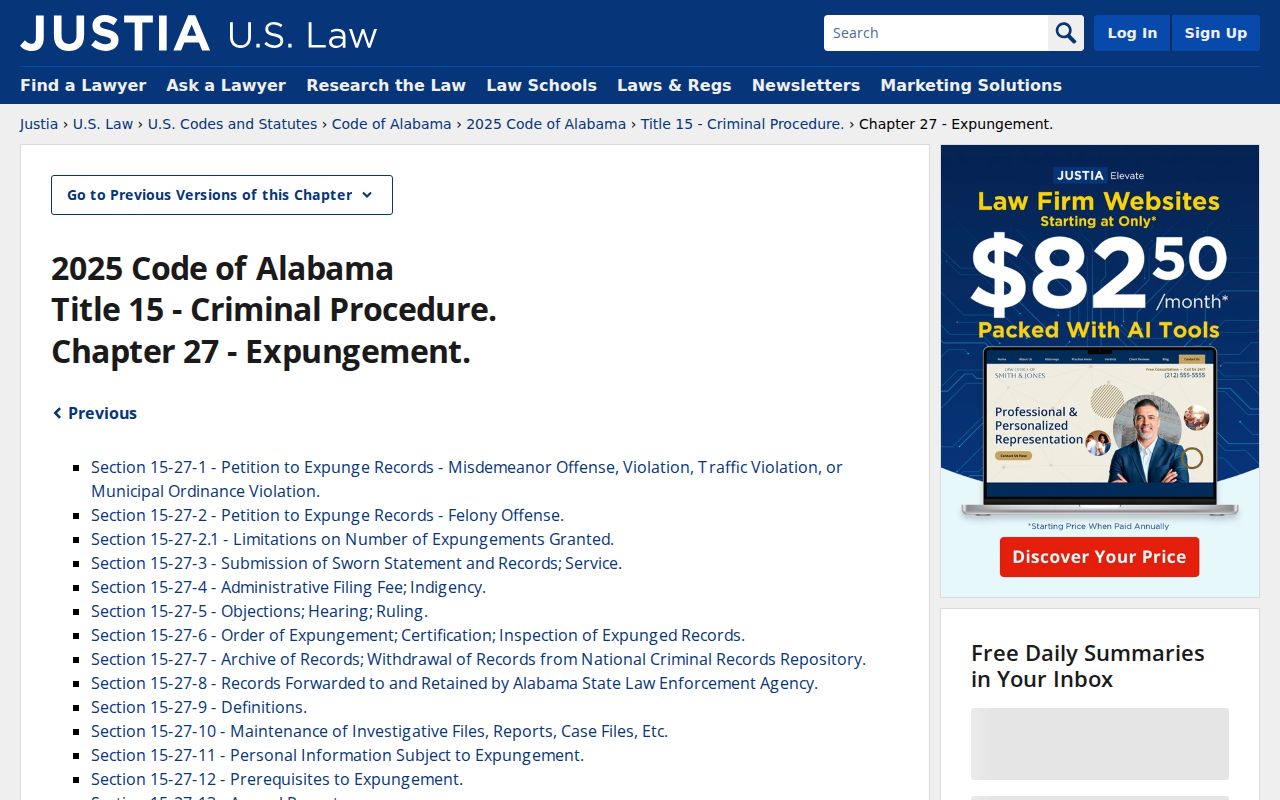
That chapter is the legal starting point for adult expungement questions, but the local filing path remains the criminal division of Circuit Court.
| Sealed | Expunged | |
|---|---|---|
| Public Visibility | Withheld from ordinary public inspection. | Removed from ordinary public access under the expungement order. |
| Local Example | Juvenile records are sealed under local juvenile practice. | Qualifying adult charges may be petitioned under Title 15, Chapter 27. |
| Access Afterward | Courts or authorized parties may still have limited access. | Law enforcement or courts may retain limited lawful access in some situations. |
Public Access to Criminal Records
Alabama's public-records framework starts with the right to inspect and copy public writings unless an exception applies. Court records also depend on court custody, court rules, sealing orders, and the type of case. The local Chilton County public-records policy applies to Commission-held records, while criminal case copies and certified dispositions should be requested from the Circuit Clerk's criminal divisions.
Key Statutes:
Ala. Code 15-27-1 covers misdemeanor, violation, traffic, and municipal ordinance expungement petitions when statutory conditions are met.
Ala. Code 36-12-40 is the open-records right to inspect and copy public writings unless an exception applies.
The misdemeanor and traffic expungement source captured for this page is Ala. Code 15-27-1.
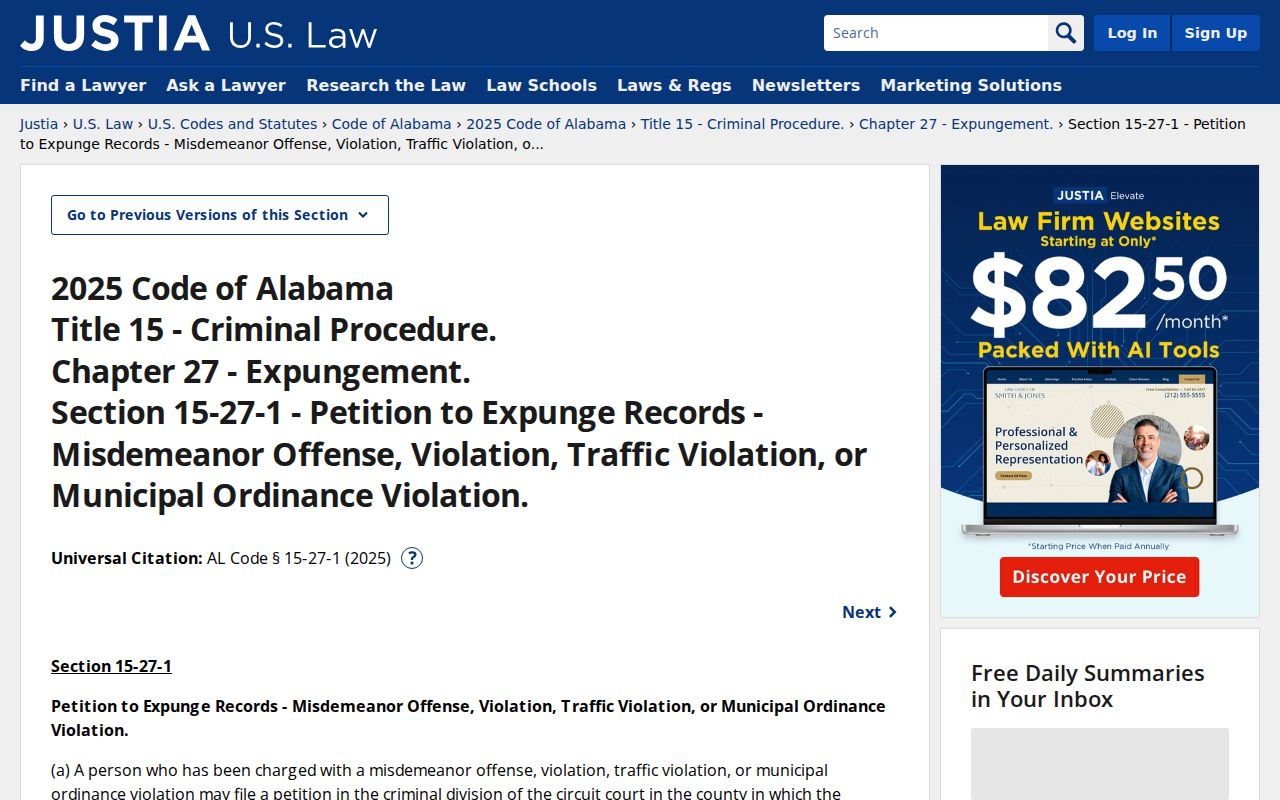
The statute helps explain why some older charges may not appear in a public search even though a record once existed.
Restricted Chilton County Criminal Records
The clearest local restriction is juvenile court. The local juvenile page says all juvenile records are sealed and that telephone questions are not answered. A person with a case question must come into the office with valid ID. Adult sealed or expunged records are also not ordinary public criminal court records. Ongoing matters may contain redactions, and personal identifiers may be withheld under public-records limits.
Background check use is a separate issue. Casual court lookups are not the same as a legally compliant consumer report for credit, employment, tenant screening, insurance, or other FCRA-regulated purposes. For court proof, rely on certified records from the clerk and verify each disposition with the official court file.
Important: A jail charge label is not a conviction and should not be treated as the final court outcome.